 By Hoyt Cain
The contemporary fashion industry moves at a speed that often outpaces human appreciation. For decades, the dominant economic model has relied on hyper-efficiency, mechanical standardization, and the rapid replication of trends. Within this landscape, accessories became victims of extreme automation. Molded plastics, synthetic leathers, and machine-stamped metals flooded the market, offering consumers affordable but entirely identical choices. While this shift democratized access to trend-driven looks, it simultaneously stripped fashion of its historical soul, leaving a wardrobe full of items devoid of character, story, or longevity.
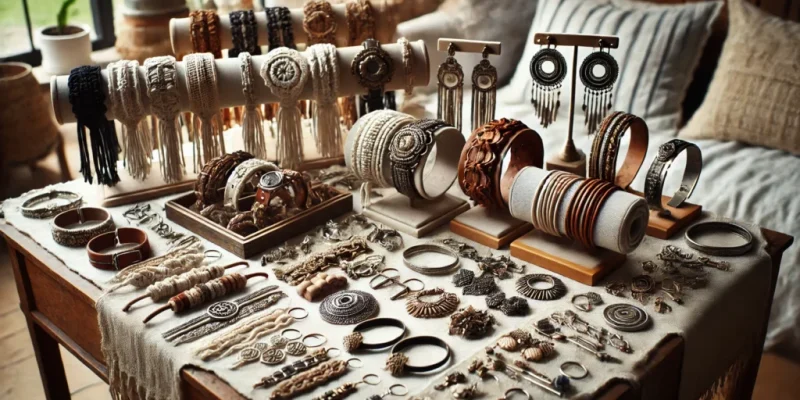
However, a cultural counter-movement is quietly dismantling the dominance of industrial uniformity. Modern consumers and avant-garde designers are increasingly rejecting the sterile perfection of mass production. In its place, they are elevating handcrafted accessories as the ultimate expression of luxury, individuality, and creative rebellion. Hand-carved jewelry, hand-woven textiles, manually stitched leather goods, and custom millinery are no longer viewed as nostalgic relics of the past. Instead, they are recognized as vital tools bringing authenticity, emotional depth, and structural integrity back into modern fashion designs.
The Psychological Shift Toward Intentional Wardrobes
The resurgence of artisanal accessories is deeply rooted in a psychological shift regarding how society defines personal value. The novelty of fast fashion has faded, replaced by an acute awareness of its environmental toll and cultural emptiness. When thousands of people can purchase the exact same machine-made bag with a single tap on a screen, the item loses its ability to convey true personal style.
Handcrafted accessories solve this crisis of conformity through the concept of inherent individuality. Because these items are produced by human hands rather than computer-controlled assembly lines, no two pieces are entirely identical. A slight variance in the hammer stroke on a silver cuff, the natural irregularities in hand-dyed silk, or the unique grain orientation of a manually burnished leather wallet are not flaws. In the modern fashion lexicon, these subtle variations are celebrated as the hallmarks of authenticity.
Furthermore, consumers are increasingly seeking an emotional connection to the objects they wear. Owning a piece that required hours of focused human labor creates a narrative link between the wearer and the maker. This connection transforms an accessory from a disposable commodity into a cherished artifact, encouraging a shift toward intentional, long-term wardrobe curation rather than impulsive consumption.
Preserving Heritage and Cultural Lineage
Beyond their aesthetic appeal, handcrafted accessories serve as critical vessels for the preservation of global cultural heritage. Many traditional crafting techniques—such as intricate beadwork by indigenous artisans, hand-loomed ikat weaving, or traditional metal filigree—are endangered skills, threatened by the retirement of elder masters and the economic pressures of mass manufacturing.
Modern designers are bridging this gap by forming equitable partnerships with artisanal communities around the world. By integrating heritage craftsmanship into contemporary fashion silhouettes, designers achieve a complex design synergy that cannot be replicated by automated machinery.
-
Weaving and Textiles: Utilizing hand-loomed fabrics for structural bags or scarves introduces textures, weights, and complex patterns that industrial looms are fundamentally unequipped to produce.
-
Metalwork and Jewelry: Forging metals using traditional charcoal fires and hand tools imparts an organic density and reflective quality completely absent from machine-molded alloys.
-
Embellishments and Embroidery: Manually applying glass beads, complex thread work, or natural materials guarantees a multi-dimensional surface that catches light and movement in a uniquely dynamic fashion.
These practices do more than just elevate a collection; they inject real capital into vulnerable artisanal economies, ensuring that priceless technical knowledge is passed down to future generations while providing the modern fashion world with an irreplaceable source of design depth.
The Material Integrity of Hand-Selected Resources
Industrial manufacturing prioritizes materials that behave predictably within high-speed machines. This requirement frequently necessitates the use of heavily processed, synthetic, or chemically altered substrates that lack character and age poorly. Handcrafting, by contrast, relies on a deep, intuitive understanding of unadulterated, premium raw materials.
An artisan working with leather, for example, handles vegetable-tanned hides that retain natural markings and texture. Because they stitch the leather by hand using techniques like the traditional saddle stitch, they can construct items with exceptional structural integrity. A machine lockstitch will unravel completely if a single thread breaks, but a manual saddle stitch uses two independent needles traveling through the same holes, ensuring that the seam remains secure even if an individual stitch wears through over time.
This focus on material integrity extends to every domain of artisanal production. Hand-spun wool retains its natural lanolin, offering superior water resistance and structural resilience. Hand-carved wooden or horn accents possess varied thermal properties and weights that synthetic plastics can only superficially mimic. By prioritizing raw, high-quality materials, handcrafted accessories do not degrade with use; instead, they develop a beautiful patina over time, gaining character and value as they age alongside the wearer.
Redefining Luxury in a Post-Industrial Market
For generation after generation, luxury was defined by exclusivity, high price points, and prominent corporate logos. However, as luxury conglomerates scaled their operations and automated their production lines to maximize global distribution, the traditional definitions of prestige began to blur. When luxury goods look as uniform as mass-market items, true exclusivity disappears.
The modern fashion industry is correcting this by redefining luxury through the lens of time, skill, and human labor. A handcrafted accessory represents an investment in human hours. It acknowledges that true beauty cannot be rushed, optimized by an algorithm, or outsourced to a robotic arm.
This evolution is highly apparent on contemporary fashion runways. Haute couture houses and independent labels alike are intentionally styling clean, minimalist garments with statement handcrafted accessories to anchors their collections in reality. A simple, bias-cut silk dress is completely transformed when paired with a bold, hand-hammered brass collar or a meticulously woven straw hat. The raw, organic texture of the accessory provides a striking counterpoint to the smooth perfection of the fabric, creating a compelling aesthetic tension that defines modern style.
The Sustainable Imperative of Artisanal Production
It is impossible to discuss the future of fashion without addressing the critical need for environmental sustainability. The traditional fashion engine relies on overproduction, resulting in massive surpluses that eventually end up in global landfills. Handcrafted accessories inherently operate within a highly sustainable, low-impact production framework.
Because these items require significant time and physical labor to produce, they are almost never created in speculative excess. Artisans typically work on a small-batch or made-to-order basis, aligning production directly with consumer demand. This process minimizes material waste and eliminates the energy-intensive carbon footprint associated with running large-scale industrial factories.
Additionally, handcrafted accessories are fundamentally designed for longevity. The combination of premium raw materials and superior manual construction methods ensures that these products can withstand years of regular use. When an item is durable and capable of being repaired by hand, it breaks the cycle of disposable consumption, proving that the ultimate form of sustainable fashion is simply creating things that people refuse to throw away.
FAQs
Why are handcrafted accessories significantly more expensive than mass-produced alternatives?
The higher price point reflects the reality of human labor, material quality, and ethical production. Mass-produced items achieve low costs by using automated machinery and cheap synthetic materials, often under compromised labor conditions. A handcrafted accessory involves hours, sometimes days, of focused work by a skilled artisan who must be compensated fairly. Additionally, artisans utilize premium, sustainably sourced raw materials that cost substantially more than industrial plastics or synthetic textiles.
How can a consumer distinguish between a genuinely handcrafted accessory and a machine-made copy?
Genuine handcrafted items possess subtle indicators of human touch that machinery cannot easily simulate. Look for slight irregularities in stitching patterns, natural variations in leather grain or fabric dye, and unique tool marks on metals or wood. Machine-made items feature absolute geometric perfection and repetition. Furthermore, reputable artisanal brands provide transparency regarding their production timelines, the specific techniques utilized, and the names or locations of the craftsmen who created the piece.
Do handcrafted accessories require special care and maintenance compared to synthetic items?
Because they are made from natural, high-quality materials like vegetable-tanned leather, pure wool, or untreated metals, they do benefit from intentional care. For instance, leather items may require occasional conditioning with natural oils, and raw metals may develop a natural oxidation that can either be left as a patina or polished away. However, unlike synthetic materials that crack and peel irreparably, natural handcrafted goods respond beautifully to maintenance, allowing them to be restored and repaired for decades.
Can handcrafted accessories easily integrate into a modern, corporate wardrobe?
Handcrafted pieces are exceptionally well-suited for professional and corporate environments. Because they lack loud corporate logos and garish trends, they exude an understated, sophisticated elegance. A classic wool blazer or a sharp corporate suit gains an air of distinct individuality when paired with a hand-burnished leather briefcase, a subtly hand-carved silver timepiece, or a uniquely woven silk scarf, allowing professionals to stand out while maintaining formal workplace standards.
How does the rise of digital e-commerce impact independent artisans who create these accessories?
Digital technology has democratized global distribution for independent creators. Historically, small-scale artisans were structurally limited to local markets or dependent on exploitative wholesale middlemen to reach larger audiences. Modern e-commerce platforms and social media channels allow individual craftsmen to showcase their process and sell products directly to global consumers, enabling them to retain a fair share of profits and maintain control over their creative output.
What is the environmental impact of the dyes used in traditional handcrafted textiles?
Many artisanal communities utilize natural, plant-based, or mineral dyes sourced locally from roots, bark, leaves, and fruits, such as indigo, madder, or walnut husks. These traditional dyeing methods are biodegradable and non-toxic, presenting a drastically lower environmental impact than the synthetic petrochemical dyes used in commercial textile factories, which frequently cause severe water pollution in surrounding ecosystems.