 By Hoyt Cain
The global fashion landscape operates on an economic engine of calculated obsolescence. Every few months, major design houses introduce new color palettes, alter preferred silhouettes, and shift the definition of what is considered contemporary. Garments that were celebrated as revolutionary in one season are routinely dismissed as outdated in the next. Consumers who attempt to keep pace with this hyper-velocity cycle find themselves trapped in a continuous loop of acquisition, disposal, and stylistic reinvention.
Yet, amid this volatile creative turbulence, certain objects remain entirely unaffected by the shifting tides of retail trends. This permanence is the defining characteristic of personal jewelry. Unlike seasonal apparel, which serves as a transient expression of a specific cultural moment, fine jewelry occupies a unique psychological and material space in human culture. It is an artistic medium designed not for a passing season, but for a lifetime, and frequently, across generations. Understanding why personal jewelry outlasts the hyper-accelerated fashion cycle requires examining its material resilience, its role in identity construction, and the profound human instinct for narrative legacy.
The Material Immunity to Physical and Creative Decay
The most immediate reason jewelry outlasts standard fashion trends is its foundational material composition. The apparel industry relies heavily on soft textiles—such as cotton, silk, wool, and increasingly, synthetic polymers. Regardless of the quality of construction, these materials are biologically vulnerable to friction, washing cycles, UV exposure, and structural degradation. A beloved coat will eventually fray, a silk blouse will tear, and denim will lose its elastic recovery.
Fine jewelry, by contrast, utilizes elemental materials that are structurally immune to organic decay. Precious metals like gold, platinum, and sterling silver do not break down over time. Gemstones like diamonds, sapphires, and rubies occupy the highest tiers of the Mohs hardness scale, resisting scratching, chemical erosion, and structural warping.
-
The Inherent Value Reclamation: If a piece of jewelry suffers mechanical damage, its raw components lose zero value. A broken gold chain can be completely melted down and reforged into a pristine modern design without losing its elemental purity, a circular lifecycle that textiles cannot match.
-
The Beauty of the Patina: While wear and tear diminishes the value of clothing, minor surface wear on precious metals often enhances the object. Over decades, platinum and gold develop a soft, burnished luster known as a patina, which serves as a visual record of its lived history.
-
Micro-Scale Engineering: Because jewelry is executed on a miniature structural scale, its mechanical joints, clasps, and settings are engineered to endure thousands of cycles of physical manipulation without failing.
This material resilience ensures that while a wardrobe must be completely rotated every few years due to physical wear, a solid gold signet ring or a pair of platinum studs can remain in continuous daily use for a century without experiencing a drop in its functional performance.
The Construction of Immutable Personal Identity
Clothing is highly situational and performative. An individual chooses their daily attire based on changing external variables: the weather forecast, workplace dress codes, social settings, and fluctuating body weight. A corporate suit is shed for evening loungewear, and winter knitwear is packed away for summer linen. Because clothing must adapt to these shifting contexts, it represents a highly mutable, flexible layer of self-expression.
Personal jewelry, however, is deeply rooted in stability. It is often selected to represent the core, unchanging aspects of an individual’s identity, operating independently of external environments.
A signature medallion, an heirloom wedding band, or a custom talisman is rarely removed. These pieces become literal extensions of the wearer’s physical body. They are worn during sleep, swimming, professional milestones, and private moments of vulnerability. Over time, this continuous physical integration shifts the object from a mere accessory into an anchor for the self. When a person wears the same gold bangle every single day for thirty years, that object ceases to be a reflection of current fashion design. It becomes a distinct, recognizable part of their personal iconography, outlasting trends simply because it has merged completely with the individual’s unique human presence.
Emotional Anchoring and the Psychology of Memory
Human beings possess an innate cognitive habit known as emotional transmutation—the practice of transferring abstract feelings, memories, and relationships onto physical objects. While any object can theoretically hold sentimental value, jewelry is uniquely optimized to act as a psychological vessel for memory.
This capacity for memory retention is amplified by the intimate physical placement of jewelry. It rests directly against pulse points, sits on fingers continuously visible to the wearer, and frames the face. Because of this proximity, the human brain forms deep associative bonds between specific jewelry pieces and key emotional breakthroughs.
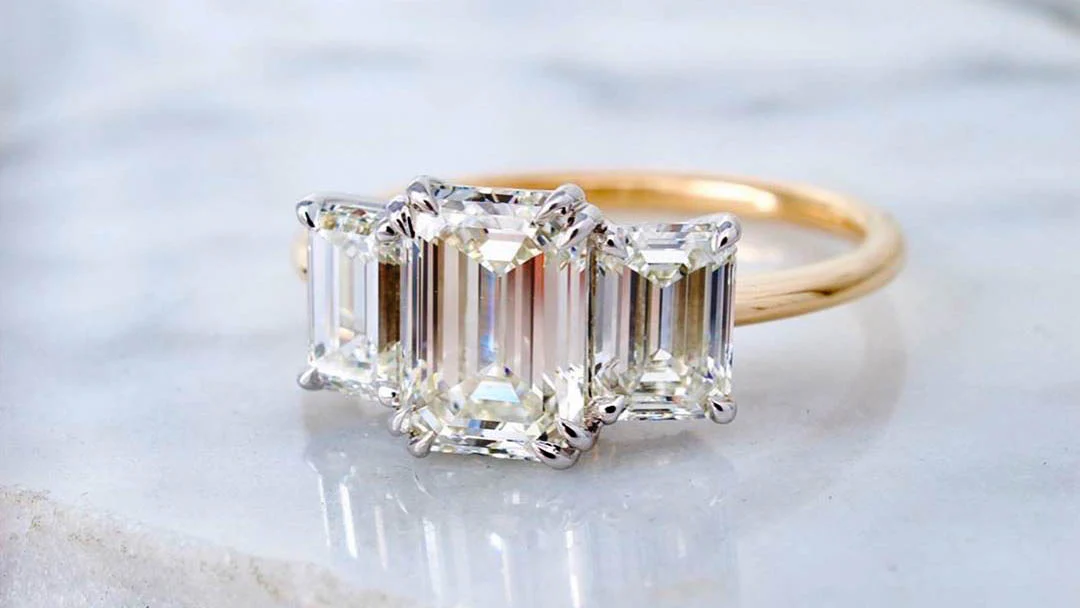
A diamond ring is rarely viewed by its owner as a geometric combination of carbon atoms and a platinum band; it is perceived as the physical manifestation of a lifelong marital promise. A silver vintage locket becomes the tactile representation of a lost grandparent. When an object holds this level of emotional weight, it becomes entirely immune to the concept of being trendy or outdated. No consumer looks at a piece of jewelry that symbolizes their hard-won professional triumph or a family lineage and decides to stop wearing it simply because a fashion magazine declared that a different metal color is popular this month. The emotional utility of the piece permanently eclipses its retail utility.
The Transgenerational Transmission of Narrative Legacy
The ultimate triumph of personal jewelry over the fashion cycle is its ability to transition seamlessly from a personal accessory to a cross-generational artifact. Clothing struggles to achieve this transgenerational leap due to the realities of human biology. A daughter may admire her mother’s vintage evening dress, but if their physical height, bone structure, or body proportions do not perfectly align, that garment cannot be worn comfortably, forcing it into permanent storage or a museum archive.
Jewelry circumvents these biological constraints with ease. A ring can be resized by a professional jeweler in a matter of hours. A necklace, a pair of earrings, or a brooch adapts instantly to any human frame regardless of size, shape, or gender.
This structural flexibility allows jewelry to serve as the primary medium for the transmission of family narratives. When an heirloom piece is passed down from a parent to a child, it carries the stories, values, and resilience of the generations that came before. The recipient wears the piece not to signal their compliance with modern retail trends, but to honor their historical roots and carry their family legacy into the future. In this context, the age of the piece becomes its greatest asset, turning what the fast-fashion industry would consider obsolete into a priceless, timeless treasure.
FAQs
Why does vintage and antique jewelry often look incredibly modern when paired with contemporary clothing?
Classic jewelry silhouettes rely on timeless geometric forms—such as circles, ovals, and clean linear arrays—that naturally align with human anatomy. Because the human skeletal structure does not change, these ancient design proportions remain universally flattering. When historic jewelry is paired with contemporary apparel, it creates a striking aesthetic contrast that feels uniquely deliberate, elevated, and original.
How can a consumer ensure they are purchasing jewelry that will truly last a lifetime?
To ensure lifelong durability, focus strictly on fine jewelry constructed from solid precious metals, specifically fourteen-karat or eighteen-karat gold, platinum, or sterling silver. Avoid pieces labeled as gold-plated, gold-flashed, or vermeil, as these items feature only a microscopic layer of gold over a base metal like brass or copper, which will inevitably wear away with regular physical contact.
Does resizing a vintage heirloom ring damage its structural integrity or lower its investment value?
When performed by a highly skilled master jeweler, professional resizing does not damage the ring. The jeweler will cut the band cleanly, add or remove identical precious metal, and laser-weld the seam before polishing it, making the alteration completely invisible. Resizing preserves the structural stability of the piece and increases its practical value by allowing it to be safely worn rather than left in a storage box.
Why is white gold rhodium-plated, and how does that affect its long-term maintenance?
Natural yellow gold is mixed with white metals like palladium or nickel to create white gold, which retains a subtle, warm yellowish undertone. To achieve a bright, reflective chrome finish, jewelers coat the piece in a rare metal called rhodium. Over years of continuous wear, this microscopic plating will naturally wear down, revealing the warmer gold beneath. This is easily maintained by having a jeweler re-rhodium dip the piece every few years to restore its original brilliance.
How do I clean and preserve delicate heirloom jewelry at home without risking chemical damage?
The safest method for cleaning most fine jewelry involves using warm water, a few drops of mild, scent-free dish soap, and an ultra-soft bristle toothbrush. Gently scrub the metal and behind the gemstone settings to remove accumulated oils and lotions, then rinse thoroughly and dry with a microfiber cloth. Avoid ultrasonic cleaners or harsh chemical dips for organic or porous gemstones like pearls, opals, turquoise, and emeralds, as these materials can crack or discolor easily.
Is it possible to modernize a family heirloom piece without erasing its historic sentimental value?
Yes, this is a common practice known as custom redesign. A jeweler can carefully remove the gemstones from an outdated, damaged heirloom setting and integrate them into a completely new, modern design that fits your personal style. This process preserves the physical, elemental components of the original gift while transforming it into a functional piece that you will comfortably wear every single day.